Spot Trouble Before It Starts at Work
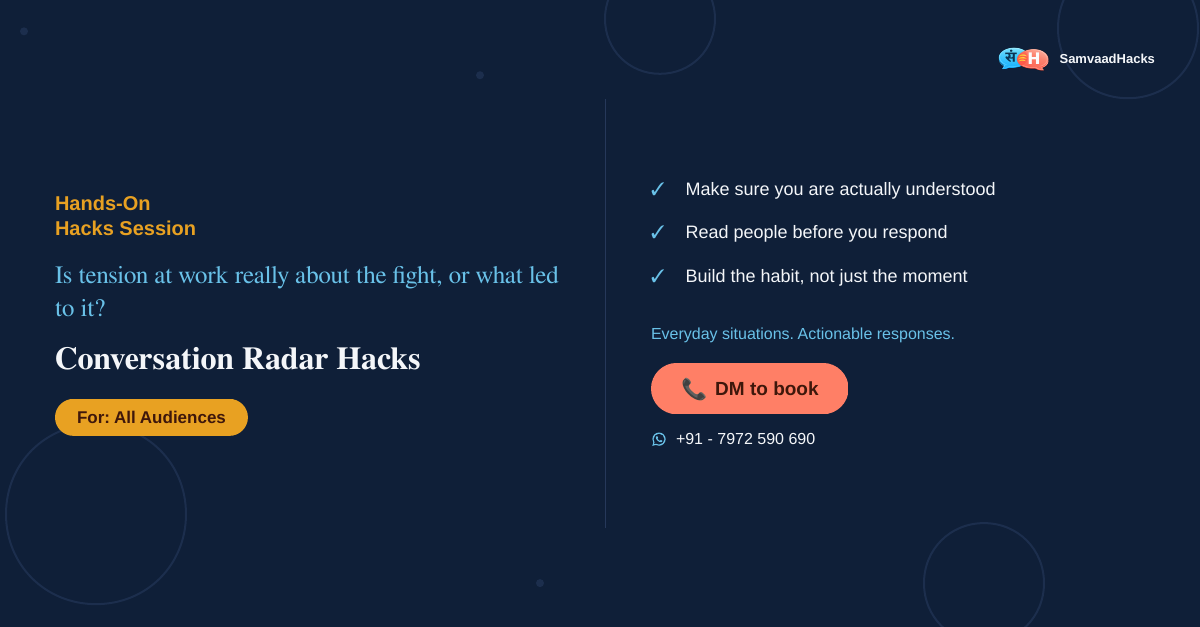
Conversation Radar Hacks: Spot Trouble Before It Starts
Most tension at work does not start with a fight. It starts with something small nobody noticed in time: a message read differently than you meant it, a meeting that ends without a clear decision, a colleague who is upset before anyone realises it. This situation-based session builds the habit of catching it early.
A few honest questions first.
Can you actually tell when a message you sent came across differently than you meant it, or do you only find out later?
Does the way you communicate actually change depending on who is listening?
When someone is upset, is your first instinct to fix it, or to notice it?
If any of those hit close, this session is built for exactly that.
Four habits that catch trouble while it is still small.
Making sure you are actually understood
Closing the gap between what you meant and what the other person understood, for whoever is listening.
Reading people before you respond
Noticing what someone is feeling, and what a moment actually needs, before you react to it.
Building the habit, not just the moment
Making this a part of how you work every day, not something you switch on for big meetings.
Protecting your everyday reputation
Building the small, consistent habits that shape how people see you over time.
You will not leave with more to say. You will leave with a sharper sense of what is actually happening around you before you say it.
Freshers, Entry- & Mid-Level and senior professionals who want fewer surprises.
If you have ever been blindsided by a reaction you did not see coming, or realised too late that a message came across wrong, this session is for you. It is built for anyone who wants to notice what is happening before it becomes a problem.
Format and logistics.
Customized per engagement. Contact us for a quote.
The full session outline is shared in the free 20-minute conversation.
Noticing what’s really happening at work: straight answers.
How do you handle a difficult conversation at work?
Most difficult conversations were once small, missable signals: a flat reply, a meeting that ended without a real decision, a message that came across differently than intended. Waiting until the conversation is already difficult means you are managing damage, not preventing it. Direction: build the habit of noticing tone and reaction early, before a response is even needed.
How do you know if a message you sent was misunderstood?
Most people judge their own clarity from their own side, assuming that what made sense to them will make sense to the reader. A reply that is slower, shorter or oddly formal than usual is often the first sign that it did not. Direction: after anything important, check what the other person actually understood, instead of assuming it matched what you meant.
How do you respond when a colleague is upset before you know why?
The instinct is to jump straight to fixing it, but offering a solution before the person feels heard often backfires and makes them dig in further. Direction: notice and name what you are seeing before you move toward solving anything.
Is this only useful for big, high-stakes conversations?
No. Conversation Radar Hacks is built on the idea that this skill is a daily habit, not something you switch on for important meetings. Small, ordinary interactions are where most of the practice, and most of the payoff, actually happens.
Can Conversation Radar Hacks be customized for our team, and what does it cost?
Yes. Every engagement is customized to your team’s level, language and schedule, so pricing is per engagement. Contact us for a quote. The first conversation is free and takes about 20 minutes.
“Think of the last time you were surprised by someone’s reaction. Looking back, was the sign actually there earlier?”
If you are not sure, that is what this session is for.